On New Years Eve, Deylin Universe found himself at a psytrance festival. The experience, a first for the Cape Town DJ and producer, was something of a revelation. “Being exposed to a new genre on a stage that big changes you,” he tells me. “You pick up on sounds, you see how bodies respond. It strips you of your preconceived thoughts of what music should be. I recorded everything that’s on Core Memory right after.”
For Deylin, this was creative liberation. “I’ve only been producing for maybe a year,” he says. “When I started Core Memory, I had just gotten over the beginning stages where you’re still figuring out what everything does. After the festival, I was at that sweet spot where I had all this inspiration, and the music could just flow out of me.” The experience proved formative enough to become the nucleus of Core Memory, his head-spinning four-track EP. “I left the festival with this afterglow. I was really in a flow of inspiration.”
That flow state came from thinking back to the memories of the festival. “And then it slowly got deeper into memories of all the dance floors that shaped me,” Deylin says. “Music works like a time machine sometimes. You hear a track, or even just a specific sound, and it takes you back immediately. Core Memory became an ode to all those moments I’ve had on dance floors since I was a kid. Since me and electronic music kind of met.”
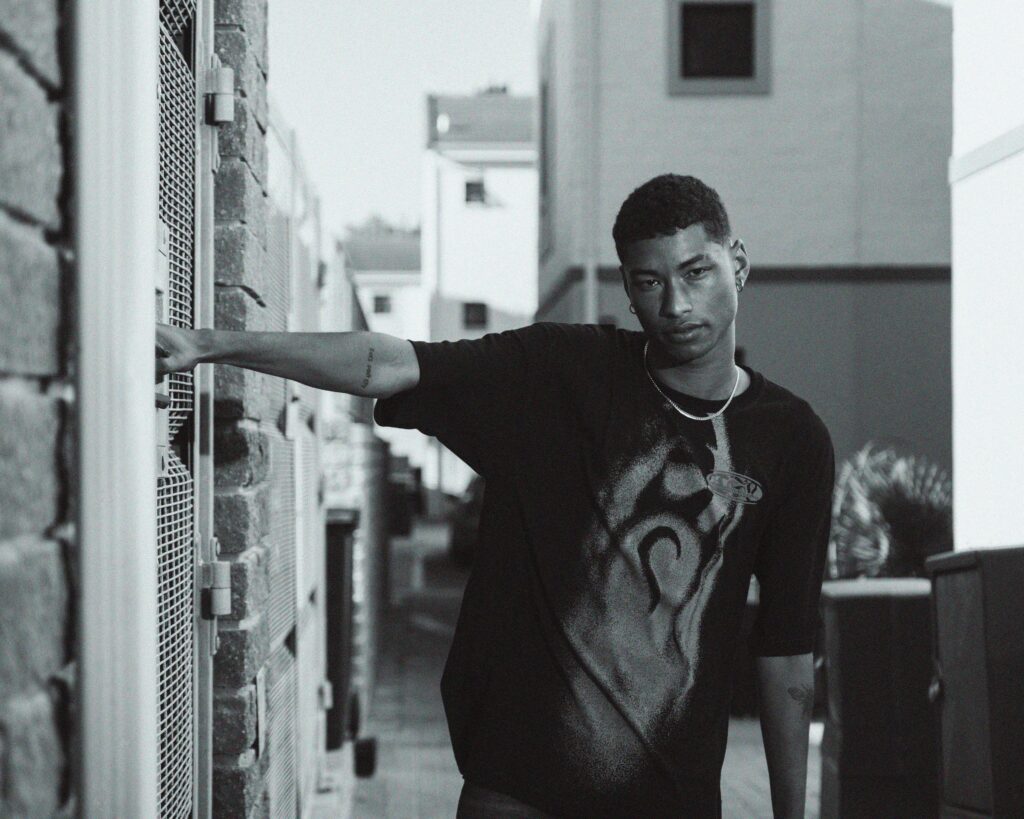
I’ve known Deylin for a while. He’s a fixture on the dance floors at my parties, and over the past few years I’ve developed somewhat of a maternal bond with him, which makes the conversation we’re having in my tiny living room particularly special. “You had such an impact on me coming into the scene,” he tells me. “Not only me, but all your children. You were kind of the genesis of my relationship with dance music.” One thing about this kid — he’s too humble. I can’t take credit for any of Deylin’s talent (more in his pinky than most, to be honest), but I do have the honour of having watched him closely as an artist, cultivating his affinity for electronic music from behind the decks to in front of the DAW. He’s never failed to astound me.
Released on Paradise as Deylin’s first label project, Core Memory tells its story across three original tracks rooted in hypnotic techno, a genre with which Deylin has developed a strong creative synergy. “Techno moved my brain in such a specific way,” he says. “It made me think about how the mind works because techno is such a mental genre.” The project is remarkably sophisticated in its approach, using techno’s inherent futurism to archive recollections of the past.
It starts with the amorphous ebb and flow of title track “Core Memory”, before slinking into the deep arpeggios of “Downstairs Situation”, where an almost deep-house bassline thrums beneath. Then you get to “Liquid Communication”. The third track on the EP is its most stylistically distinct. The car-alarm sirens of gqom, the alien linguistics of psytrance — motifs from across the genres that speak to Deylin’s journey on the dance floor are pulled into the 4/4 motorik pulse of techno.
“‘Liquid Communication’ is actually the track I did the most research for,” Deylin says. “Before the festival, I was already researching Australian ‘bush doofs’ and this specific kind of psychedelic techno they play there. Not the Goa stuff, something deeper. But I still wanted the track to feel intuitive. I was moving while I made the EP, moving with the tracks. That was the one where I knew exactly what I wanted out of it.”

The music on Core Memory sounds unlike anything coming from local techno artists right now, both a reclamation and statement of intent. “As a queer coloured boy, I know I exist outside of the current landscape of the techno scene, specifically in Cape Town. Within that displacement, I found my voice. Jeff Mills says techno is going against systems, resisting, imagining new ideas and things that aren’t there yet. Techno is very rooted to my queerness in that sense.” In Deylin’s universe, techno is both familiar and totally unique. “It’s actually formless,” Deylin says. We’re waxing deep on techno theory. “The more formless something is, the more techno it is.”
What makes Deylin such a remarkable talent is his instinct for that formlessness. His choices serve both the somatic and conceptual qualities of the music. “It’s really cool experiencing techno the way it exists now,” he says. “Think about Berghain and the stuff they’re playing there. To me, that was all so new. Jeff Mills said something that stuck with me. He said techno existed before Detroit, and it’ll exist after we’re all gone. It’ll keep evolving and changing into whatever it needs to be. That’s why it was important for me to make a techno project like this. This is my timestamp on what techno feels like to me.”
Core Memory is visceral, but also occupies a more esoteric, cerebral space that suggests Deylin understands techno not just as a genre, but as a mode of communication. “It transcends,” he says simply. “It transcends borders, countries. That’s how amapiano blew up all over the world. Music is a way to communicate.”
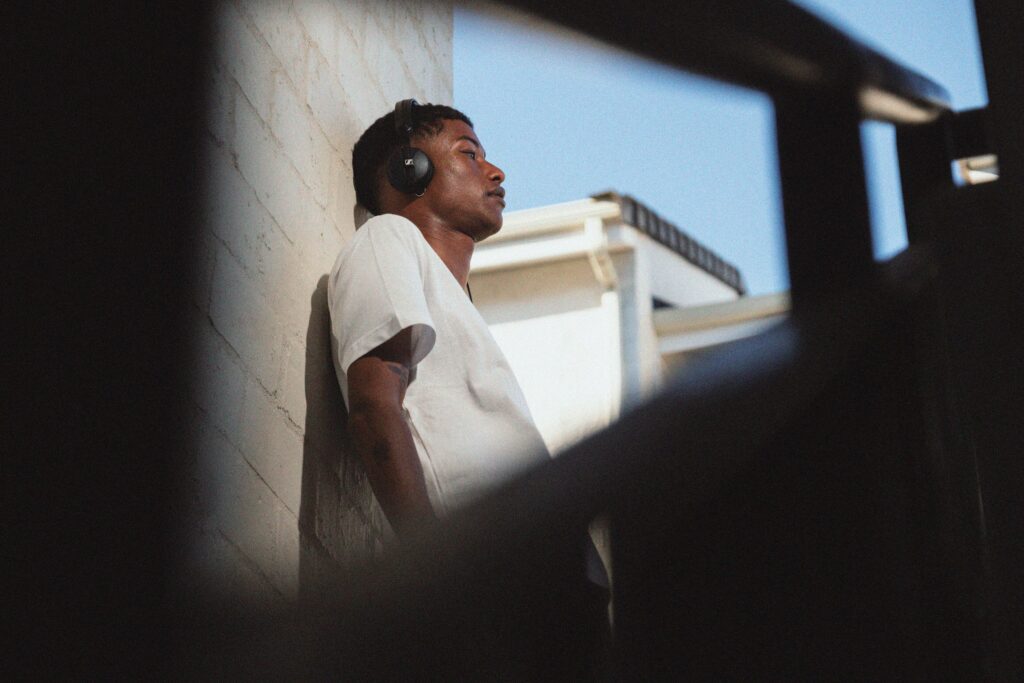
He’s taken that language and transcribed it in his own words. In this case, he’s playing with the temporal nature of techno by recontextualising its futurism as a method of archiving as much as imagining. “Music is a time machine,” he says again. “Even before I realised I wanted to be a DJ, I was a dancer. I was breakdancing on cardboard boxes on the floor. Dance and music have always been tied to my memory. I can think about my life through music.”
“WASP”, his recent release with fellow producer JAIDE, further reveals how Deylin uses the archive of everyday life to dream up sounds of the future. “We were literally just playing with the arrangements of the song and then this wasp came into the studio, buzzing around. And this buzzing wasp became the basis for the bassline.”
Deylin was initially hesitant about including a remix on Core Memory. “When the label first suggested it, I was a bit on edge,” he confesses. “Honestly, it was selfish. I wanted the project to just be mine.” But the remix ultimately becomes another mode of communication within the EP’s wider world. “Remixes are so important,” Deylin says. “Sometimes that’s how people first hear a track. It’s humans taking what another human has done and translating it into their own thing.”
Upon hearing London producer James Harbrecht’s take on “Liquid Communication”, Deylin heard something that felt like a distillation of the project’s thesis. “I loved how he took it somewhere deeper,” he says. “I wanted ‘Liquid Communication’ to sit in this darker space, but James expanded the world of it.”
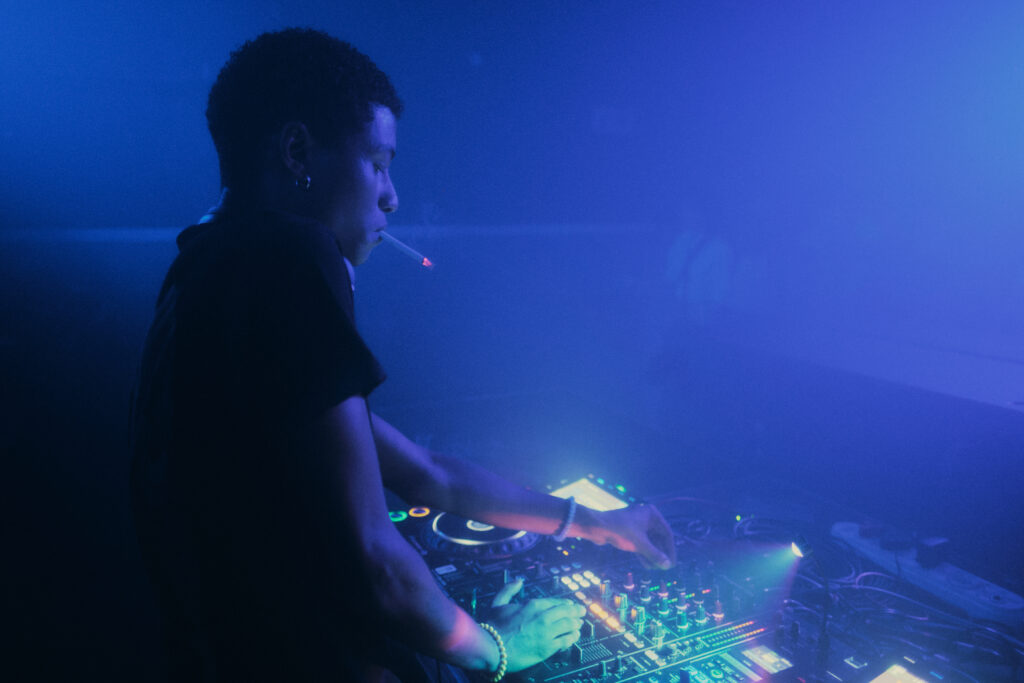
Deylin approaches producing like a DJ. That curatorial instinct guides his choices, resulting in tracks with clear, intentional arcs. “I go in asking, ‘How would this operate on a dance floor?’” he explains. “When do I give people space to breathe? When do I bring it back? How do I start them somewhere and leave them somewhere else? DJ’ing really took me deeper,” he says. “It taught me how music works as an archive.”
Much like the contradiction of techno, Deylin sees music as a lifelong journey that can’t really be defined. Only surrendered to. “The only thing that’s constant is change,” he says. “Everything moves around that. I know my music isn’t going to sound like this forever. It’s going to evolve, and I’m going to grow. I’m still learning what my artistic voice is, and I always will be.”
Like a DJ set, whatever Deylin does next will be designed to move you. Not just up, or down. Maybe sideways, too. “Chomi, it’s already happening,” he giggles. “I’m on my ambient shit. I’m so excited because what I release next isn’t going to sound like Core Memory again. But Core Memory will always be the genesis of my journey.”